For online events, details are sent out the week of the event. Join our community to receive them!
Ultracold molecules for quantum science
Doyle, John - Harvard University
Presentation on Thursday, March 19, 2026, noon
Location: MIT CUA Room (26-214)
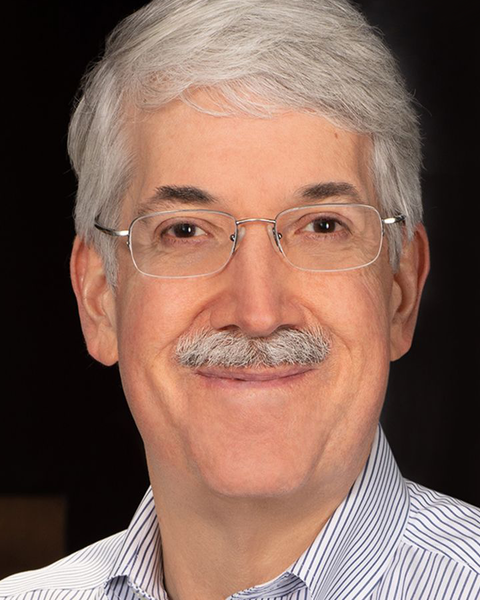
Nineteenth century physics and chemistry, in particular spectroscopy, laid the groundwork for the development of quantum mechanics. The richness of molecular spectra was at the same time beautiful and bedeviling, leading to models of wave resonances and vortices in “molecules”. Today, detailed spectroscopy has given us full quantum control over small molecules. We can now hold single polyatomic (CaOH) molecules in optical tweezer arrays. This approach embodies one of the themes in the continuing development of quantum research in this century - the taming of every complex quantum objects and the assembly of fully controllable, but increasingly complex engineered complex systems. I will also describe our work in Metrology-based Particle Physics, using ultracold molecules under full quantum control to search for physics beyond the Standard Model (BSM) and the prospects for probing time reversal violating BSM physics >100 TeV, and searching for ultralight Dark Matter.
John Doyle, Henry B. Silsbee Professor of Physics, Harvard University, grew up in the U.S. and received his bachelor’s (1986) and Ph.D. (1991) degrees from the Massachusetts Institute of Technology (M.I.T.). After being a postdoc at M.I.T., he joined Harvard University as an assistant professor of physics in 1993. John Doyle's research centers on using cold molecules for science including particle physics, collisions, and quantum information. Starting with the development a new technique for producing heavy, polar radical molecules in an intense cold beam, he launched with collaborators searches for physics beyond the Standard Model (BSM) through probing for the electron electric dipole moment. His group is a pioneer in the cooling and trapping of molecules, studying collisional processes in atoms and molecules and developing tools to achieve full quantum control over increasingly complex molecular systems. They pioneered the laser cooling of polyatomic molecules and are working to realize new techniques to trap and study interactions in polyatomic molecules.
John Doyle is the co-Director of the Harvard Quantum Initiative, director of the Japanese Undergraduate Research Exchange Program (JUREP), and he co-founded the Harvard/MIT Center for Ultracold Atoms, where for twenty years he was co-director. He has published papers in the areas of ultracold atoms, molecules, spectroscopy, precision measurement, ultracold neutrons, respiratory disease transmission mitigation, and dark matter detection and supervised the PhDs of over thirty students. He is an Optica, Humboldt, Fulbright, and American Physical Society (APS) Fellow, a member of the National Academy of Sciences, and received the APS Ramsey and Broida prizes, and Optica Meggers prize. He was elected president of the APS and currently serves as Immediate Past President on the Board.